
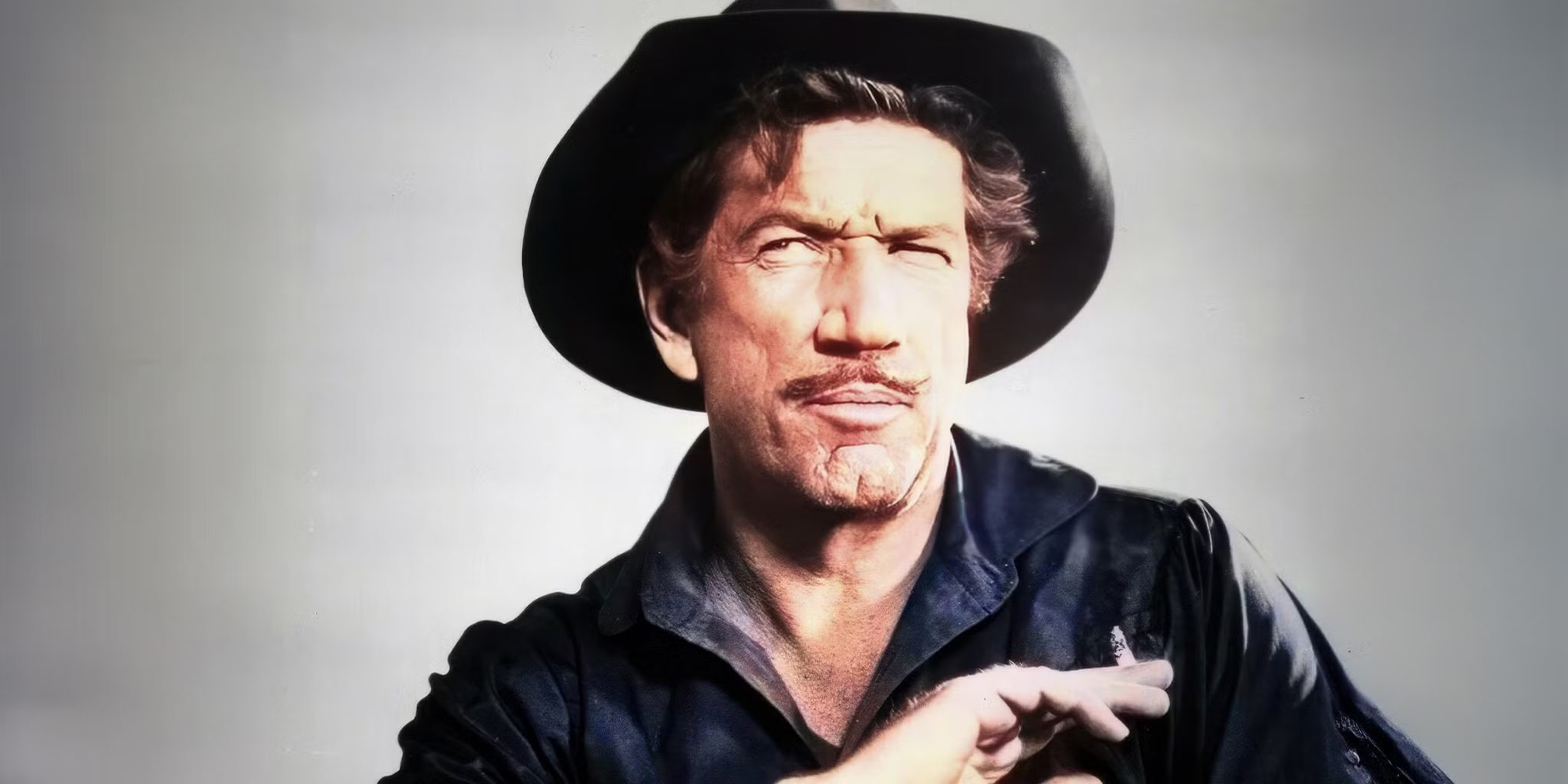
Introduction to Richard Boone
When discussing the evolution of television acting—especially in the golden era of Westerns—few names carry the same weight as Richard Boone. Known for his commanding presence, deep voice, and uncompromising approach to performance, Boone carved out a legacy that continues to influence actors and filmmakers today. He wasn’t just another cowboy on screen; he was a force—complex, intense, and unapologetically authentic.
This article explores Boone’s life, career, and lasting impact, diving into the nuances that made him one of the most respected actors of his time.
Early Life and Background
Richard Boone was born on June 18, 1917, in Los Angeles, California, into a family that was already somewhat connected to the arts. His father was a corporate lawyer, but his lineage included notable figures like frontiersman Daniel Boone, which perhaps Richard Boone hinted at the rugged persona he would later embody on screen. Growing up in California exposed Boone to a blend of urban sophistication and frontier mythology—an interesting combination that shaped his personality.
Despite his eventual success in Hollywood, Boone’s early life wasn’t centered on acting. He attended Stanford University, where he studied pre-med, indicating that his original career path might have been entirely different. However, like many of his generation, Richard Boone his life took a dramatic turn during World War II. Boone served in the U.S. Navy, where he experienced the harsh realities of war. These experiences would later influence the emotional depth and realism he brought to his roles.
After the war, Boone explored various career options, including painting and writing, before discovering his passion for acting. He studied at the Actors Studio in New York, immersing himself in the craft. This period was crucial in shaping his technique, as he adopted a method-style approach that emphasized authenticity and emotional truth.
His early struggles in theater and television taught him resilience. Richard Boone Unlike many actors who sought fame quickly, Boone was more interested in mastering his craft. This dedication would become a defining characteristic of his career, setting him apart from his contemporaries.
Breaking into Hollywood
Boone’s entry into Hollywood was not immediate or easy. Richard Boone Like many aspiring actors, he faced rejection and uncertainty. His early work included small roles in films and television, where he often played supporting characters. However, even in these minor appearances, Boone’s presence was hard to ignore. His deep voice and intense gaze gave him a natural authority on screen.
One of his earliest notable roles came in the Richard Boone film Halls of Montezuma (1951), where he portrayed a Marine officer. Although it wasn’t a leading role, it showcased his ability to convey strength and vulnerability simultaneously. This balance became one of his trademarks.
During the early 1950s, Boone appeared in numerous television shows, a medium that was rapidly gaining popularity. Unlike many film actors who looked down on television, Boone embraced it as a platform for storytelling. He saw its potential and was willing to experiment with different roles.
His persistence paid off when he began to receive more substantial roles. Richard Boone Casting directors recognized his unique qualities—he wasn’t conventionally handsome in the Hollywood sense, but he had a rugged charisma that made him compelling. This distinctiveness helped him stand out in an industry often dominated by stereotypes.
The Rise of a Television Icon: Have Gun – Will Travel
The turning point in Boone’s career came with the television series Have Gun – Will Travel (1957–1963). In the show, he played Paladin, a sophisticated yet deadly gun-for-hire who operated out of San Francisco. The character was unlike any other Western hero at the time—he was educated, cultured, and philosophical, yet capable of ruthless efficiency when necessary.
Paladin’s character allowed Boone to explore a wide range of emotions and moral dilemmas. Each episode presented a new story, often with complex themes that went beyond the typical good-versus-evil narrative. Boone’s performance brought depth to the character, making Paladin both relatable and enigmatic.
The show was a massive success, becoming one of the most popular Westerns of its era. It stood out for its writing, production quality, and Boone’s commanding performance. Unlike many Westerns that relied heavily on action, Have Gun – Will Travel focused on storytelling and character development.
Boone’s portrayal of Paladin earned him critical acclaim and several award nominations. More importantly, it cemented his status as a television icon. The role demonstrated his ability to carry a series while maintaining a high level of artistic integrity—a rare achievement in the industry.
Acting Style and Unique Persona
Richard Boone’s acting style was distinctive and often described as intense, deliberate, and deeply authentic. He was not interested in superficial performances; instead, he sought to understand the psychological motivations of his characters. This approach made his performances feel real and grounded.
One of Boone’s most notable traits was his voice. Deep, resonant, and commanding, it added a layer of authority to his roles. Whether delivering a quiet monologue or a forceful command, Boone’s voice had a way of capturing attention and conveying emotion.
Physically, Boone also brought a unique presence to the screen. He wasn’t overly expressive, but his subtle gestures and controlled movements spoke volumes. This restraint made his performances more powerful, as he relied on nuance rather than exaggeration.
Boone also had a reputation for being uncompromising in his work. He was known to challenge directors and writers if he felt that a scene lacked authenticity. While this sometimes made him difficult to work with, it also ensured that his performances maintained a high standard.
Film Career and Notable Roles
While Boone is best known for his television work, he also had a significant film career. He appeared in a variety of genres, demonstrating his versatility as an actor. From Westerns to dramas and even science fiction, Boone proved that he could adapt to different storytelling styles.
One of his notable film roles was in The Alamo (1960), where he played Sam Houston. The film, directed by John Wayne, was an epic historical drama that required strong performances from its cast. Boone’s portrayal added depth to the narrative, showcasing his ability to handle larger-than-life characters.
Another significant role came in The Shootist (1976), which also starred John Wayne. In this film, Boone played a doctor, delivering a performance that was both understated and impactful. The role highlighted his ability to convey emotion with subtlety.
Boone’s film work often reflected his preference for meaningful stories. He wasn’t interested in roles that lacked substance, which sometimes limited his opportunities but ensured that his performances remained memorable.
The Richard Boone Show and Creative Control
After the success of Have Gun – Will Travel, Boone sought greater creative control over his work. This led to the creation of The Richard Boone Show (1963–1964), an ambitious anthology series in which Boone played different characters in each episode.
The show was unique for its time, featuring a repertory company of actors and a focus on diverse storytelling. Boone’s goal was to push the boundaries of television, exploring complex themes and unconventional narratives.
Although the show received critical praise, it struggled with ratings and was canceled after one season. However, it remains an important part of Boone’s legacy, demonstrating his willingness to take risks and innovate.
This project also highlighted Boone’s versatility as an actor. Playing different roles each week required a high level of skill and adaptability, which he handled with ease.
Personal Life and Off-Screen Personality
Richard Boone was known for being a private and somewhat enigmatic individual. Unlike many Hollywood stars, he avoided the spotlight and rarely engaged in publicity. He preferred to let his work speak for itself.
He was married three times and had one son. Despite his success, Boone chose to live away from Hollywood for much of his life, eventually settling in Hawaii. This decision reflected his desire for a quieter, more independent lifestyle.
Boone was also known for his strong opinions and intellectual curiosity. He enjoyed discussing philosophy, politics, and art, often engaging in deep conversations with colleagues. This intellectual side added another layer to his personality, making him more than just an actor.
His off-screen demeanor mirrored the complexity of his on-screen characters—thoughtful, intense, and unapologetically authentic.
Legacy and Influence
Richard Boone’s influence on television and film is undeniable. He helped elevate the Western genre, bringing depth and sophistication to a format that was often considered simplistic. His portrayal of Paladin remains one of the most iconic characters in television history.
Boone also paved the way for future actors who sought to bring authenticity and complexity to their roles. His commitment to his craft set a standard that continues to inspire performers today.
In addition to his acting, Boone’s willingness to experiment with storytelling—particularly in The Richard Boone Show—demonstrated the potential of television as an artistic medium. His efforts contributed to the evolution of television into a platform for serious drama.
Even decades after his passing in 1981, Boone’s work continues to be appreciated by audiences and critics alike. His performances remain timeless, a testament to his talent and dedication.
Conclusion
Richard Boone was more than just a television star; he was a pioneer who redefined what it meant to be an actor in the medium. From his early struggles to his iconic role in Have Gun – Will Travel, Boone consistently demonstrated a commitment to excellence.
His unique style, intellectual depth, and willingness to challenge conventions set him apart from his peers. Whether on television or in film, Boone brought a level of authenticity that few could match.
Today, his legacy serves as a reminder of the power of storytelling and the importance of staying true to one’s craft. For anyone interested in the history of television or the art of acting, Richard Boone remains a figure worth studying and celebrating.



Leave a Reply