
Introduction to alhambra palace night tour attendance revenue
The Alhambra Palace is not just one of Europe’s most iconic landmarks—it’s also a fascinating case study in how cultural heritage sites balance tourism, preservation, and revenue generation. While millions of visitors flood the palace during the day, the night tour experience has quietly evolved into a highly strategic and financially significant operation.
In this article, we’ll unpack everything about Alhambra palace night tour attendance revenue—from visitor numbers and ticket pricing to economic impact and long-term sustainability. The goal is simple: give you a clear, expert-level understanding in a conversational way, without losing depth.
Understanding the Alhambra Night Tour Concept
The Alhambra night tour is not just a standard sightseeing option—it’s a carefully curated experience designed to showcase the palace under controlled conditions. Unlike daytime visits, which allow broader access to the complex, night tours focus primarily on specific areas like the Nasrid Palaces or the Generalife gardens.
One of the most important aspects of the alhambra palace night tour attendance revenue night tour is its intentional limitation. The management authority, known as the Patronato de la Alhambra y Generalife, restricts access to preserve fragile architectural elements. This means fewer visitors but a more immersive experience.
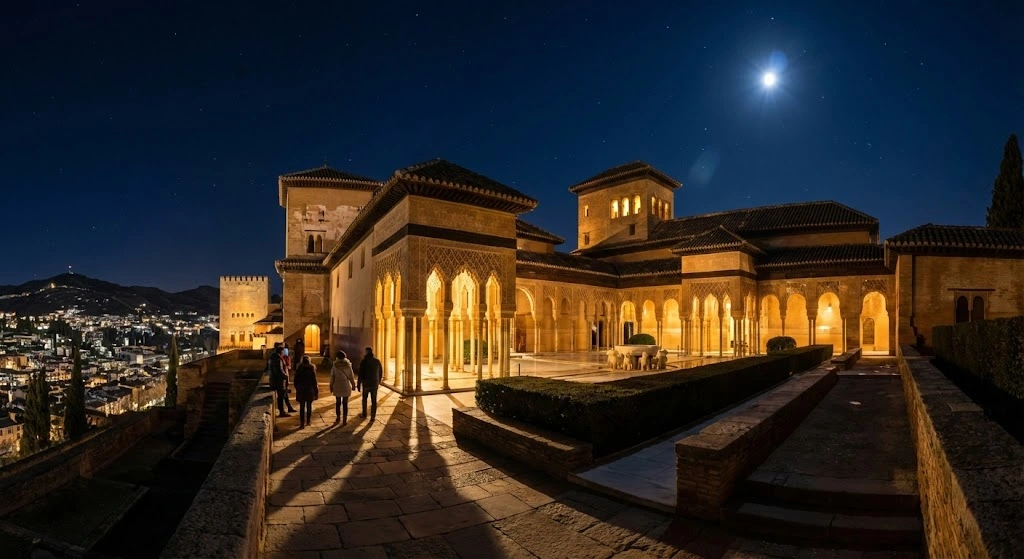
From a visitor perspective, the night tour offers something entirely different. The palace is illuminated with carefully designed lighting, creating a quiet, almost mystical atmosphere. This experience appeals to photographers, repeat visitors, and those seeking a more intimate encounter with history.
From a business standpoint, however, this controlled access model is where things get interesting. Instead of maximizing volume, the Alhambra focuses on maximizing value per alhambra palace night tour attendance revenue visitor, which directly shapes attendance and revenue patterns.
Attendance Trends: How Many People Visit at Night?
When discussing Alhambra palace night tour attendance revenue, understanding attendance is the first step. Unlike daytime visits, which reach into the millions annually, night tours operate on a much smaller scale.
Estimates suggest that night tours attract around 120,000 to 150,000 visitors per year, representing roughly 5% of total Alhambra visitors. This relatively low number is not due to lack of demand but rather strict capacity limits.
On a daily basis, attendance varies depending on the season. During peak months—especially spring and summer—the Alhambra hosts approximately 400 to 500 night visitors per evening, while off-season numbers drop to around 200–300. These fluctuations are influenced by weather, tourism trends, and scheduling.
Seasonality plays a major role. Summer alhambra palace night tour attendance revenue evenings are particularly popular because daytime temperatures in Granada can be extremely high. Night tours offer a cooler, more comfortable alternative, which has led to significant growth in evening attendance over recent years.
Another interesting trend is repeat visitation. A significant portion of night tour attendees have already visited the Alhambra during the day. These visitors are drawn by the unique atmosphere and are often willing to pay for a second ticket, effectively increasing overall revenue per tourist.
Ticket Pricing and Revenue Structure
The pricing strategy behind the Alhambra night tours is deceptively simple but highly effective. Standard ticket prices typically range between €8 and €13, depending on the specific experience.
There are also premium options:
- Guided night tours priced at €15–€20
- Combined or specialty experiences reaching €16 or higher
- Additional revenue from audio guides and group bookings
This layered pricing system allows the alhambra palace night tour attendance revenue Alhambra to extract more value from each visitor without significantly increasing attendance.
When we look at revenue, estimates vary widely depending on what is included. Conservative calculations based purely on ticket sales place annual revenue at around €1.8 to €2.5 million.
However, when additional income streams such as guided tours, audio guides, and premium packages are included, the total estimated revenue rises significantly—reaching between €8 million and €12 million annually.
This discrepancy highlights an important point: night tour alhambra palace night tour attendance revenue revenue is not a single number but a range, depending on how you define it.
Why Attendance Is Intentionally Limited
At first glance, it might seem counterintuitive that the Alhambra does not try to maximize visitor numbers. After all, more visitors typically mean more revenue.
But the Alhambra operates under a different philosophy.
The palace is a UNESCO World Heritage alhambra palace night tour attendance revenue Site, and its preservation is the top priority. The intricate plasterwork, wooden ceilings, and delicate tile designs are highly vulnerable to wear and tear. Increasing visitor numbers beyond a certain point could cause irreversible damage.
This is why attendance is capped. The goal is to maintain a balance between accessibility and conservation.
Interestingly, this limitation actually increases demand. Scarcity creates value, and night tour tickets often sell out quickly despite the limited capacity. This allows the Alhambra to maintain stable revenue without compromising the integrity of the site.
In economic terms, this is a classic example of a low-volume, high-value model—a strategy that many cultural institutions are now trying to replicate.
Comparing Night Tours to Daytime Revenue
To fully understand Alhambra palace night tour attendance revenue, it’s essential to compare it with daytime operations.
Daytime visits dominate in terms of sheer numbers. The Alhambra receives approximately 2.7 to 3 million visitors annually, generating around €45–50 million in revenue.
By contrast, night tours:
- Attract only 120,000–150,000 visitors annually
- Generate between €1 million and €12 million, depending on calculation methods
Despite this disparity, night tours have a key advantage: higher profit margins per visitor.
Daytime operations require extensive staffing, full alhambra palace night tour attendance revenue facility access, and large-scale crowd management. Night tours, on the other hand, operate with limited staff and restricted areas, reducing operational costs.
This means that while total revenue is lower, the efficiency of night tours is significantly higher.
Factors Influencing Night Tour Attendance Revenue
Several factors directly impact the Alhambra palace night tour attendance revenue. These variables shape both visitor numbers and financial outcomes.
1. Seasonality
Tourism peaks during spring and summer, leading to higher attendance and revenue. Winter months see reduced demand due to colder weather and shorter days.
2. Weather Conditions
Rain can significantly disrupt night tours. In fact, cancellations due to weather can result in annual revenue losses of €200,000 to €300,000.
3. Pricing Strategy
Flexible pricing, including premium experiences and guided tours, allows the Alhambra to increase revenue without increasing visitor numbers.
4. Visitor Behavior
Repeat visitors and photography enthusiasts alhambra palace night tour attendance revenue contribute disproportionately to night tour revenue. These groups are often willing to pay higher prices for unique experiences.
5. Marketing and Booking Systems
The shift toward online booking has significantly improved ticket sales efficiency, with a large percentage of tickets now sold digitally.
Economic Impact Beyond Ticket Revenue
The financial impact of Alhambra night tours alhambra palace night tour attendance revenue extends far beyond ticket sales. The palace is a major economic driver for the city of Granada.
Night tours, in particular, play a unique role in the local economy. Because they take place in the evening, they encourage visitors to stay overnight rather than leaving after a daytime visit.
This has several ripple effects:
- Increased hotel bookings
- Higher restaurant revenue
- Greater demand for local services
Studies suggest that the Alhambra contributes hundreds of millions of euros annually to Granada’s economy, with tourism-related businesses heavily dependent on its visitors.
Night tours amplify this impact by extending visitor activity into the evening hours, effectively boosting the city’s nighttime economy.
How Revenue Is Used: Preservation and Sustainability
Unlike many tourist attractions, the Alhambra alhambra palace night tour attendance revenue operates as a public institution rather than a profit-driven business. This means that all revenue generated—including night tour income—is reinvested into the site.
The allocation typically follows three main categories:
- Operational costs (around 40%): staffing, security, lighting, and maintenance
- Conservation and restoration (around 30%): preserving historical structures
- Education and infrastructure (around 30%): research, visitor services, and system improvements
This reinvestment model ensures that the Alhambra remains sustainable in the long term.
Night tour revenue, in particular, plays a crucial role in funding restoration projects. Without this income, maintaining the palace’s delicate structures would be significantly more challenging.
Challenges and Limitations of the Night Tour Model
While the night tour system is highly effective, it is not without its challenges.
One major issue is limited scalability. Because attendance is capped, there is a natural ceiling on revenue growth. Unlike commercial attractions, the Alhambra cannot simply increase capacity to generate more income.
Another challenge is data transparency. Official alhambra palace night tour attendance revenue figures for night tour revenue are not always clearly separated from overall financial reports, making precise analysis difficult.
Additionally, external factors such as weather, global travel trends, and economic conditions can impact attendance.
Despite these challenges, the night tour model remains one of the most successful examples of sustainable tourism in the world.
Future Trends and Opportunities
Looking ahead, the Alhambra is exploring new ways alhambra palace night tour attendance revenue to enhance night tour revenue without increasing visitor numbers.
Some potential developments include:
- Premium “moonlight” tours with higher ticket prices
- Exclusive photography sessions
- Private group experiences
- Enhanced digital booking systems
These initiatives aim to increase revenue per visitor while maintaining strict conservation standards.
The broader trend is clear: the future of cultural tourism lies in quality over quantity.
Final Thoughts: What the Numbers Really Tell Us
The story of Alhambra palace night tour attendance revenue is not just about numbers—it’s about strategy.
Here’s the big picture:
- Attendance is intentionally limited to protect the site
- Revenue is generated through smart pricing and premium experiences
- Night tours contribute a smaller but highly efficient share of total income
- The model prioritizes sustainability over short-term profit
In a world where overtourism is becoming a major issue, the Alhambra offers a compelling alternative. It shows that it’s possible to generate meaningful revenue while preserving cultural heritage.





Leave a Reply